Beautifully Broken: Why Gaming's Roughest Indie Gems Hit Harder Than Any AAA Blockbuster
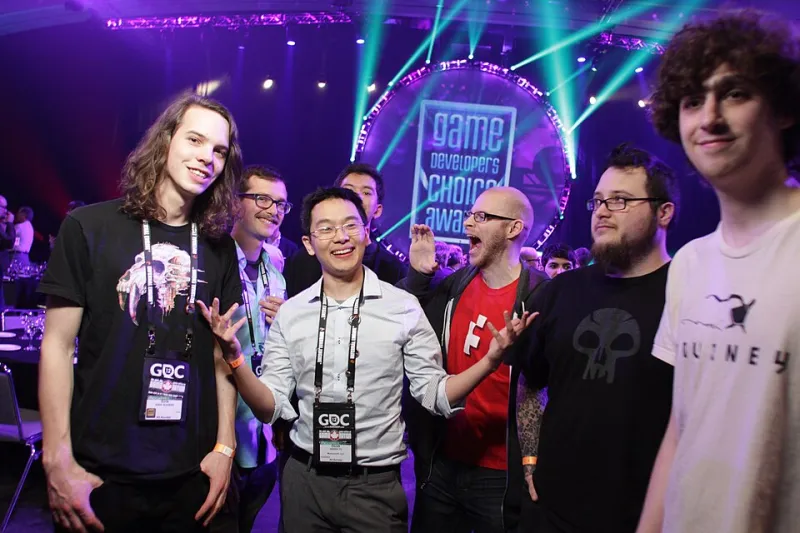
Photo: Official GDC, CC BY 2.0, via Wikimedia Commons
There's a moment every gamer knows. You boot up some weird little title you found buried in a Steam sale, the tutorial text is slightly off-center, the character model clips through a wall within the first thirty seconds, and the soundtrack sounds like it was recorded in a bathroom. And then — somehow — you're three hours in and you haven't moved from your chair.
That's the janky indie magic. And it's not an accident.
The 'Asset Flip' Reputation Problem
Let's be honest about where the conversation starts. For years, "asset flip" was basically a slur in gaming circles — shorthand for a lazily assembled cash grab where a solo dev slapped together a bunch of store-bought 3D models, called it a game, and charged $4.99 for the privilege of experiencing something that felt like a tech demo from 2003.
And yeah, those exist. Nobody's pretending they don't.
But somewhere along the way, the definition got sloppy. Games that were genuinely rough — not lazy, but rough — started getting lumped in with the real garbage. Titles built by one or two people pouring their whole creative brain into something new and weird started getting dismissed because they didn't look like they cost forty million dollars to make.
That's a bad call. And more players are waking up to it.
What "Polish" Is Actually Hiding
Here's the uncomfortable truth about AAA production values: they're often a distraction mechanism. When a game looks absolutely stunning — when the lighting is photorealistic and every animation is motion-captured and the UI was clearly designed by a team of forty — it's easier to not notice that the actual game underneath is hollow.
Polish covers gaps. It fills silence. It gives your brain something to process so you don't immediately clock that the combat has no depth, the story goes nowhere interesting, and the open world is a checklist dressed up in a trench coat.
Janky games can't hide behind any of that. When a game looks rough, the design has to carry its own weight. The mechanics have to be interesting enough that you stick around despite the visual noise. The world has to have enough personality that you forgive the pop-in and the framerate dips.
That's actually a harder thing to pull off. And when it works? It hits completely different.
The Games That Proved the Point
Think about something like Kenshi — a post-apocalyptic sandbox RPG that, by any conventional standard, is an absolute mess. The UI is bewildering. The early game will kill you constantly in ways that feel almost personal. The graphics are years behind the curve. And it has one of the most devoted fanbases in PC gaming, full of players who've sunk hundreds of hours into it and will defend it like it owes them money.
Or look at Caves of Qud, which presents itself with ASCII-adjacent visuals and a complexity level that would make a spreadsheet nervous. Doesn't matter. The depth of the world-building, the sheer weirdness of its creative vision, has turned it into something people talk about the way they talk about classic literature.
Neither of these games apologizes for what it is. That refusal to apologize is part of the brand.
Imperfection as Authorship
There's something weirdly intimate about a game that shows its seams. When you can tell that one person made every texture, wrote every line of dialogue, and probably tested half the levels themselves, you're experiencing something that big studio games almost never give you: a direct line to a creative mind.
It's the difference between a major label pop album and a bedroom recording. One has been processed and optimized until every rough edge is gone. The other has a cough in the background of track three and a guitar slightly out of tune, and somehow that's the one you keep coming back to.
Janky indie games are bedroom recordings. The imperfections aren't bugs in the creative process — they're signatures.
Why Players Are Leaning In
Gaming culture in the US has shifted pretty noticeably over the last few years. There's a real and growing fatigue with games that feel like products rather than experiences. Games designed by committee, tested into blandness, monetized at every available surface. Players are exhausted.
Into that exhaustion walks the weird little indie that does one thing nobody else is doing, does it imperfectly, and means every second of it.
Communities form fast around these games. Not just because the games are good — though often they are — but because finding them feels like discovering something. Like you're in on it. The rough edges become tribal markers. "Yeah, I played it before they patched the thing where you could fall through the floor." That's a badge of honor.
Streaming culture accelerated this. A buggy indie moment that goes sideways in a hilarious way is infinitely more watchable than a polished AAA game working exactly as intended. Chaos is content. And janky games have chaos built in.
The Line Worth Keeping
None of this is an argument that every broken game is secretly a masterpiece. There's still a meaningful difference between a game that's rough because it was made with limited resources and genuine creative ambition, and a game that's broken because nobody actually cared.
The tell is usually in the details. Does the game have a vision? Is there something it's clearly trying to do, even if it doesn't always succeed? Does it make you feel like someone, somewhere, was genuinely excited to make it?
That excitement is contagious. It comes through the pixels and the clipping and the slightly too-loud menu music. And when you feel it, you don't care that the inventory system is kind of a nightmare. You're in.
Breaking Free From the Polish Trap
At Unchained Blades, we talk a lot about liberation — about games that refuse to play by the rules and players who refuse to be told what to enjoy. The janky indie phenomenon fits that ethos perfectly.
These games are unchained in the most literal sense. They're not beholden to a publisher's quality bar, a marketing team's vision, or a focus group's comfort zone. They exist because one person — or a tiny crew — had an idea and chased it all the way to release, rough edges and all.
That's not a lesser form of game development. That's the purest form of it.
So next time you're scrolling through a storefront and something catches your eye that looks a little off — the screenshots are a little weird, the description reads like it was written at 2am, the gameplay trailer has some clearly unintended moments in it — maybe give it a shot. You might be looking at the next cult classic.
Or you might be looking at a broken mess. But honestly? Sometimes those are the same thing.