Smashing the Blueprint: How Indie Studios Are Rewriting the Rules of Action Gaming
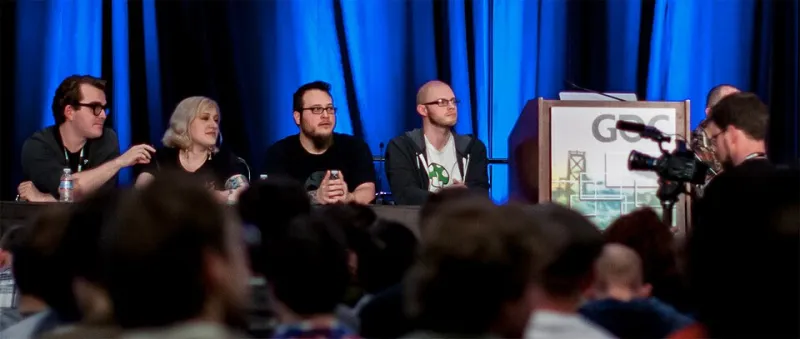
Photo: Fuad Kamal from USA Cropped by czar, CC BY-SA 2.0, via Wikimedia Commons
The Machine Is Breaking Down
Somewhere between the fourth battle pass of the year and the fourteenth microtransaction prompt, a lot of gamers started asking a pretty reasonable question: who is this actually for?
Not us, it turns out. The bloated live-service model that dominated the last decade of AAA gaming was never really built around the player experience. It was built around the revenue model. Engagement metrics. Retention loops. Quarterly earnings calls. And somewhere in all that corporate noise, the actual fun got squeezed out.
But here's the thing — while the big publishers were busy optimizing their monetization funnels, a wave of small, scrappy development teams was quietly doing something radical. They were just... making great games. No strings attached. No season passes. No artificial walls between the player and the experience they paid for.
These are the studios worth talking about. The ones breaking the chain.
Team Cherry and the Power of Patience
Let's start with the obvious one. Team Cherry — a two-person operation out of Adelaide, Australia — released Hollow Knight in 2017 and basically redefined what a single game could accomplish on a shoestring budget. The metroidvania was massive, gorgeous, and brutally rewarding. No paid DLC. No battle pass. Just a complete game that kept giving.
Their follow-up, Silksong, has become gaming's most-watched development story precisely because of what Team Cherry represents: the idea that a tiny team with a clear vision can command the same level of anticipation as any AAA release. They're not chasing a release window dictated by shareholders. They're making the game they want to make. That kind of creative freedom is exactly what the indie scene is supposed to be about.
Poncle and the Accidental Revolution
Luca Galante — working largely solo under the Poncle banner — launched Vampire Survivors in early access in late 2021 and charged exactly $2.99 for it. The gaming world kind of lost its mind.
Here was a game with intentionally retro visuals, almost no narrative, and a gameplay loop so simple it sounded boring on paper. And yet it was wildly addictive. More importantly, it was generous. Expansive content updates. Reasonable DLC pricing. Zero pay-to-win mechanics. Galante essentially proved that you don't need a cinematic budget or a live-service skeleton to keep players hooked — you just need a loop that's genuinely fun and a developer who isn't trying to squeeze every last dollar out of the community.
Vampire Survivors won BAFTA's Game of the Year. Let that sink in.
Supergiant Games: Narrative Muscle Without the Bloat
Supergiant has been doing this for a while now, but they deserve a spot in any conversation about indie studios that get it right. Based in San Francisco, the team behind Bastion, Transistor, Pyre, and Hades operates with a level of creative discipline that most AAA studios can't touch.
Hades in particular is a masterclass in how to build a roguelite that respects player time. The storytelling unfolds naturally through repeated runs. The progression feels earned. And when the game launched out of early access, it was done — not a content skeleton waiting to be monetized into a full product. Supergiant doesn't do season passes. They do games.
Ska Studios: Grinding It Out in the Underground
James Silva and Michelle Juett Silva have been building games together under the Ska Studios name since the early Xbox Live Arcade days, and their work on Salt and Sacrifice (and its predecessor Salt and Sanctuary) represents something important: the long game. These are action-RPGs built with genuine love for the genre, offering punishing combat and deep lore without demanding anything beyond the initial purchase.
Ska Studios isn't chasing viral moments or influencer partnerships. They're building for the hardcore action crowd that wants substance over spectacle — and that audience repays the loyalty.
Motion Twin and Dead Cells' Living Legacy
French studio Motion Twin built Dead Cells into one of the most replayable action-roguelikes on the market, then did something almost unheard of in modern gaming: they handed the game's ongoing development off to a dedicated team (Evil Empire) and let it keep growing. Years of updates, paid DLC that actually added meaningful content, and a community that's stayed engaged without being manipulated into it.
The Dead Cells model is a template worth studying. Longevity through quality, not coercion.
Larian Studios: The Outlier That Proved Everyone Wrong
Okay, Larian isn't exactly a two-person bedroom operation — but in the context of AAA publishing culture, they're still punching from the outside. Baldur's Gate 3 launched in 2023 as a fully realized RPG with no microtransactions, no battle pass, and a staggering amount of content for the base price. It sold tens of millions of copies and dominated every end-of-year award show.
Publishers immediately started claiming the game was a fluke. That players don't actually want complete experiences. That the model isn't sustainable. The gaming community's response was essentially a collective eye-roll. Larian proved the demand is absolutely there — the industry just hasn't been meeting it.
What This All Means for the Rest of Us
The pattern here isn't complicated. Small teams with creative control and a genuine respect for their audience keep producing games that outperform expectations — critically, commercially, and culturally. The studios profiled above aren't anomalies. They're a signal.
The grip that live-service models and corporate-controlled game design had on the industry is loosening. Players are voting with their wallets, their reviews, and their word-of-mouth. And the indie scene — scrappy, uncompromising, and increasingly talented — is ready to fill the vacuum.
At Unchained Blades, this is exactly the kind of gaming culture we exist to celebrate. No chains. No corporate overlords deciding what your fun looks like. Just developers and players, connected by the shared belief that games should set you free — not lock you in.
The blueprint is broken. Good riddance.