No One Left on the Bench: How Action Games Are Rewriting the Rules on Who Gets to Play
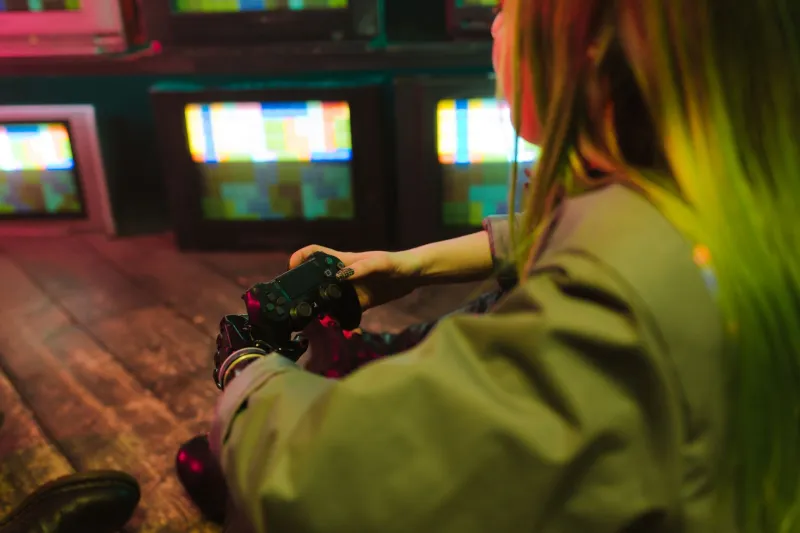
There's a moment every action game fan knows. The controller in your hands, the screen exploding with movement, that electric feeling of being completely in the fight. For years, though, that moment belonged to a pretty narrow slice of players. If your hands didn't move fast enough, if your vision made certain color cues invisible, if a standard controller layout just didn't work for your body — the game didn't care. You were out.
That's changing. Fast.
Across the industry, developers are waking up to something that should have been obvious a long time ago: the more people who can actually play your game, the better. And the technical tools they're building to make that happen are quietly reshaping what action gaming even looks like.
The Old Gatekeeping Nobody Talked About
Action games have always worn their difficulty like a badge of honor. That culture isn't entirely wrong — there's real satisfaction in mastering something hard. But "hard" and "inaccessible" got tangled up for a long time, and the industry mostly let it slide.
Fixed control schemes meant players with limited hand mobility were just stuck. High-contrast action sequences with no visual alternatives locked out players with color blindness or low vision. Reflex-heavy combat with no timing adjustments made entire genres feel hostile to anyone with motor impairments. The message, even if nobody meant it this way, was pretty clear: this space isn't built for you.
The disability gaming community didn't disappear, though. They built workarounds, modded games, created custom hardware setups. They showed up anyway, because the love for these games was real. It just took the industry a while to meet that love with actual design effort.
What Modern Accessibility Actually Looks Like
The shift didn't happen all at once, and it didn't come from one big announcement. It came from individual studios deciding to treat accessibility as a design pillar instead of a checkbox.
Fully remappable controls sound simple, but they're genuinely transformative. When a player can move any action to any button or key, it stops mattering what the default layout assumes about your hands. Players with one-handed setups, adaptive controllers, or custom input devices can configure the game to meet them where they are. That's not a workaround — that's the game actually working.
Adaptive difficulty systems go even deeper. Some games now let players tune individual parameters — enemy reaction speed, damage dealt and received, parry windows, even the speed of certain animations — independently of each other. That's a completely different animal from a simple Easy/Normal/Hard slider. A player who needs more time to process visual information but doesn't want combat to feel trivial can dial in exactly that. The challenge stays meaningful; the arbitrary barriers disappear.
Then there's the audio and visual side. Subtitle customization — size, color, background contrast, speaker labels — used to be an afterthought. Now some of the most polished releases treat it as a full feature set. High-contrast modes, colorblind-specific palettes, options to reduce motion blur and screen shake for players with vestibular disorders — these aren't small tweaks. For the players who need them, they're the difference between playing and not playing.
The Liberation Angle Nobody's Talking About Enough
Here's the thing that doesn't get said loudly enough: accessibility features don't just help players with disabilities. They expand freedom for everyone.
That remappable control scheme? It also helps left-handed players who've always had to fight ergonomics. The adjustable timing windows? They help a working parent who only gets 45 minutes to game at night and can't grind the same boss fight for two weeks. The subtitle options? Useful for anyone gaming in a noisy apartment or putting the game on while a roommate sleeps nearby.
When you design for the edges of the player spectrum, you accidentally make things better for everyone in the middle. That's not a theory — it's what studios that have committed to this approach keep discovering.
The Xbox Adaptive Controller is probably the most visible hardware example of this principle in action. Built explicitly for players with limited mobility, it became a platform that all kinds of players found uses for. Accessibility as a design goal produced something genuinely new and genuinely useful.
The Studios Getting It Right
Credit where it's due: some developers have gone all-in on this and it shows. The Last of Us series raised the bar so high on accessibility options that it basically became an industry reference point. Over 60 customizable features at launch isn't a footnote — it's a statement about who the game is for.
Celeste took a different approach, baking in an "Assist Mode" that let players slow the game down, turn on invincibility, or skip sections entirely — while being completely transparent that these options existed and weren't shameful to use. The game's community embraced it. Nobody's Celeste playthrough got worse because someone else used Assist Mode.
Smaller indie studios are picking up the torch too. When you don't have a massive marketing budget, reaching every possible player matters even more. Thoughtful accessibility implementation is also just smart business for a studio trying to grow an audience.
The Pushback (and Why It Doesn't Hold Up)
There's always been a segment of the gaming community that treats accessibility features like a threat — like making a game playable for more people somehow dilutes the experience for everyone else. That argument has never really made sense, and it makes less sense every year.
Your playthrough doesn't change because another player turned on an aim assist. The boss you beat on the hardest setting doesn't get retroactively easier because someone else used a more forgiving difficulty. Games aren't zero-sum. More players in the community means more discussion, more fan art, more passion, more longevity for the things you love.
The gatekeeping was never about protecting the experience. It was about protecting a feeling of exclusivity. And that's a pretty weak foundation for a community that claims to be about freedom.
What Comes Next
The industry still has ground to cover. Accessibility documentation is inconsistent — some games bury their options in menus with no explanation, while others publish detailed accessibility guides before launch. There's no universal standard for what features get included or how they're labeled. The conversation between developers and disability advocates needs to keep going, and it needs to happen earlier in the development process, not as a post-launch patch.
But the direction is right. The tools exist. The will to use them is growing. And the players who've been waiting at the door for years are already walking through it.
At Unchained Blades, we believe the whole point of action gaming is the feeling of possibility — the sense that you can take on whatever the game throws at you and come out the other side. That feeling shouldn't have a cover charge. It shouldn't require a specific body or a specific set of physical abilities.
The chains that kept players out of these worlds weren't difficulty. They were bad design. And the best developers in the industry right now are cutting them loose.