No Combo Required: The Action Games Proving Skill Isn't About Speed
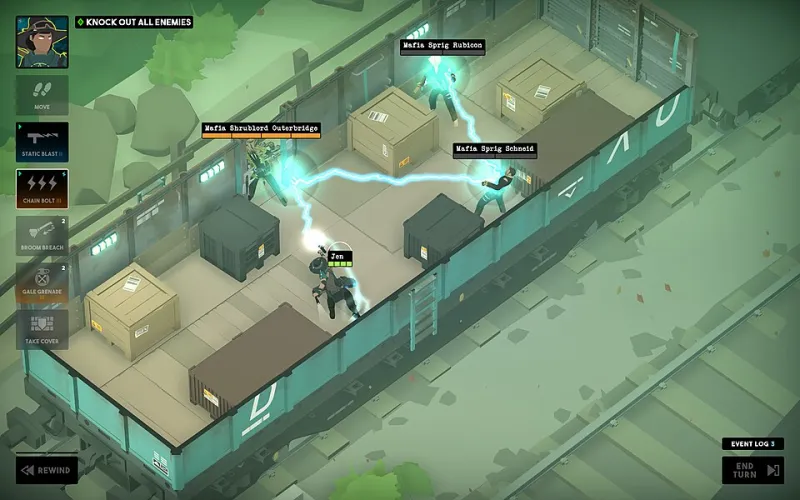
Photo: Suspicious Developments, CC BY-SA 4.0, via Wikimedia Commons
For a long time, being good at action games meant one thing: execution. You either had the fingers for it or you didn't. Frame-perfect parries, 20-hit combo strings, muscle memory built through hundreds of hours of repetition—this was the unspoken entry fee for a huge chunk of the genre. And if you couldn't pay it, a lot of games just weren't for you.
That wall is coming down. Not because games are getting easier—some of the most demanding titles releasing right now fall squarely into this new wave—but because developers are redefining what hard actually means. Across indie studios and mid-tier publishers, there's a clear and growing movement toward action games where your brain does the heavy lifting instead of your thumbs.
The Combo String Problem
Let's be honest about what traditional combo-heavy action design actually asks of players. Mastering a game like Devil May Cry 5 at a high level is genuinely impressive—it's practically a performance art form. But that ceiling is also a wall for anyone who doesn't have the time, the hardware, or frankly the neurological wiring to build that kind of execution precision.
The issue isn't that those games exist. They're incredible. The issue is when that design philosophy becomes the default assumption across an entire genre—when tactical depth gets confused with mechanical complexity, and when the only way a game can feel challenging is by demanding faster, more precise inputs.
That conflation has been quietly unpacked by a generation of designers who grew up playing those games and then asked a pretty simple question: what if the skill expression lived somewhere else?
Thinking Is the Controller
Look at something like Into the Breach—technically a strategy title, but one that shares enormous DNA with the tactical decision-making these newer action games are chasing. Every move is deliberate. Every outcome is visible before you commit. The challenge comes entirely from your ability to read a situation and respond intelligently, not from how fast you can process and react.
Now bring that philosophy into real-time action. Games like Sifu walk an interesting line here—it has execution demands, sure, but its core loop is fundamentally about reading opponents, managing positioning, and making smart choices about when to press and when to back off. The players who master it aren't necessarily the fastest; they're the most patient and observant.
Weird West takes a different approach, building action encounters around environmental awareness and preparation. You can walk into a fight guns blazing and get torn apart, or you can spend two minutes setting up the room and walk out without a scratch. The game rewards forethought over reflexes almost every single time.
Indie Studios Are Doing the Heavy Lifting Here
The most interesting experiments in this space are consistently coming out of smaller studios—teams that don't have the budget to build 60-hour combo tutorial systems and instead have to make their combat sing through cleverness.
Caves of Qud is a cult favorite that buries action mechanics inside deep systemic logic—understanding how status effects interact, how terrain shapes encounters, and how your character build changes the calculus of every fight. It looks impenetrable from the outside, but the actual skill expression is almost entirely conceptual.
Then there's Darkest Dungeon, which strips action down to positioning and resource management. The combat isn't fast. It's not flashy. But the decisions you make—who to heal, when to stress-heal, whether to burn a powerful ability now or save it—carry enormous weight. Losing a fight in that game almost always traces back to a choice, not a reflex failure.
Even something like Hades, which does have execution elements, leans heavily on build decision-making and encounter reading. The players who dominate that game aren't necessarily pulling off technically perfect runs—they're the ones who understand the systems deeply enough to construct builds that do the work for them.
What "Accessible" Actually Means
There's a tendency in gaming discourse to treat accessibility as a synonym for easy, and that framing does real damage to this conversation. The action games we're talking about aren't easy. Many of them are genuinely brutal. But they're brutal in a way that rewards understanding rather than rehearsal.
That's a fundamentally different kind of gatekeeping—or rather, a different kind of gate. Instead of asking "can you execute this 15-hit sequence under pressure," these games ask "do you understand this system well enough to solve this problem?" The first question has a hard biological ceiling. The second one doesn't.
This matters enormously for a US gaming audience that skews older and busier than the stereotype suggests. According to the Entertainment Software Association, the average American gamer is in their early 30s and plays games in shorter sessions. That person might love action games conceptually but can't realistically dedicate the time needed to master execution-heavy combat. Skill-over-execution design meets them where they are.
The Design Language Is Shifting
You can see this philosophy bleeding into bigger titles too. Elden Ring is a useful case study—it's punishing, absolutely, but it's punishing in a way that consistently rewards observation and patience over speed. The players who struggle most with FromSoftware games are often the ones trying to brute-force encounters with reaction speed rather than learning the rhythm of a boss and responding to readable patterns.
Mid-tier action titles like Greedfall and Steelrising built their combat systems explicitly around deliberate, methodical play—stamina management, positioning, and timing windows that are forgiving enough that near-misses feel like close calls rather than failures of execution.
The thread connecting all of these is a respect for the player's intelligence over their reflexes. These games assume you can learn and adapt. They don't assume you can physically input commands faster than most people's nervous systems allow.
Breaking the Gatekeeping Chain
Action gaming has always had something powerful at its core—the fantasy of mastery, of overcoming challenge through skill and determination. The genre's best moments feel earned in a way that few other game types can match.
For too long, though, "earned" came with an asterisk. Earned if you had the right hardware. Earned if you could carve out 300 hours of practice. Earned if your hands worked a certain way.
The shift toward tactical depth and player intent isn't watering that down. It's actually expanding it—opening up that feeling of genuine mastery to players who were always capable of it, just not in the specific way the genre traditionally demanded.
You don't need to be fast. You need to be smart. And honestly? That sounds like a much more interesting game.