Step Away to Level Up: The Weird Truth About Quitting Mid-Session

Photo by Photo by Les Taylor on Unsplash on Unsplash
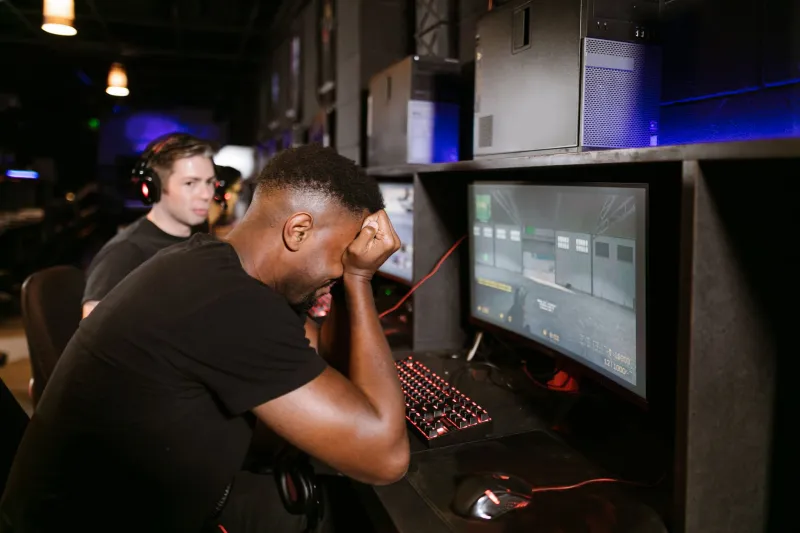
We've all been there. You're deep in a boss fight — fourth attempt, maybe fifth — and the controller is one more death away from becoming a wall decoration. So you slam it down, mutter something unprintable, and storm off to do literally anything else. Classic rage quit. And according to pretty much every gamer stereotype, that makes you a loser.
Except it doesn't. Not even close.
Here's the counterintuitive thing nobody really talks about in gaming communities: stepping away from a frustrating session might be the single most effective thing you can do to actually get better. Not a crutch. Not an excuse. A legitimate strategy. And the research — plus the players who compete at the highest levels — backs it up hard.
Your Brain Isn't Built for Infinite Grinding
Let's start with the neuroscience, because it's genuinely wild. When you're deep in a frustrating loop — dying to the same enemy, missing the same dodge window, fumbling the same combo — your brain isn't just bored. It's actively working against you.
The prefrontal cortex, which handles decision-making and fine motor coordination, starts to degrade under sustained cognitive stress. Meanwhile, your amygdala — the part of your brain that screams "danger" — ramps up. You get tunnel vision. You stop adapting and start reacting. Muscle memory gets sloppy because anxiety is literally overriding the neural pathways you're trying to build.
In plain English: the longer you force yourself to keep playing after frustration sets in, the worse you perform. You're not practicing the right moves anymore. You're practicing panic.
Sleep researchers have a concept called consolidation — the process by which your brain cements new skills during rest. It happens most aggressively during sleep, but even a short break triggers early stages of it. That boss pattern you couldn't crack after two hours of trying? Your brain is still processing it while you're making a sandwich or watching TV. Come back an hour later, and suddenly your fingers know what to do. It feels like magic. It's just biology.
What Top Players Actually Do
Ask any competitive action game player — the ones who grind fighting game tournaments, who clear souls-like content at insane paces, who speedrun games down to the frame — and they'll tell you the same thing: scheduled breaks aren't weakness. They're part of the training regimen.
Take the speedrunning community as an example. Runners who chase world records don't just play until they drop. They track their session quality, notice when their execution starts slipping, and deliberately log off before frustration compounds into bad habits. "You can grind a bad movement into your muscle memory just as easily as a good one," one longtime speedrunner once put it during a Twitch stream. "If I'm playing angry, I'm basically practicing how to play angry."
Fighting game competitors talk about this too. The concept of "tilt" — that mental state where frustration starts feeding bad decisions, which create more frustration — is treated like a genuine threat to performance. Managing tilt isn't considered soft. It's considered fundamental. You wouldn't tell a marathon runner to sprint on a stress fracture. Same logic applies here.
The Passion Drain Nobody Warns You About
Beyond raw skill, there's another casualty of forced grinding: the actual joy of playing.
Action games are built on a loop — challenge, struggle, breakthrough, reward. That loop is what makes them addictive in the best possible way. But when you refuse to step away, you collapse the loop. The challenge stops feeling like an invitation and starts feeling like punishment. The breakthrough, when it finally comes, doesn't hit the same because you're too exhausted and resentful to celebrate it.
This is how people fall out of love with games they used to worship. It's not the game's fault. It's not even really the player's fault. It's what happens when you ignore the natural rhythm the experience is built around.
Some of the most passionate long-term action game fans are the ones who've learned to treat their enthusiasm like a resource — something to be replenished, not depleted. They put the controller down not because they're giving up, but because they're protecting the thing that made them pick it up in the first place.
Intentional Disconnection Is a Skill
Here's the reframe that might actually change how you play: walking away on purpose is harder than it sounds, and doing it well is its own kind of mastery.
Most of us are wired to push through. American gaming culture especially glorifies the "git gud" mentality — the idea that struggle only has value if you keep slamming your face into it. And there's truth in that, to a point. Persistence matters. But persistence without self-awareness is just stubbornness, and stubbornness doesn't translate to skill.
Knowing when to disengage — before the frustration peaks, before the bad habits set in, before the passion drains — requires paying attention to yourself the same way you pay attention to the game. Noticing when your reaction time is slipping. Recognizing when you've stopped problem-solving and started button-mashing out of spite. Feeling the difference between productive struggle and counterproductive suffering.
That kind of self-awareness is genuinely rare, and it's genuinely powerful.
Come Back Unchained
There's something fitting about this whole idea when you think about what gaming is supposed to be. These games — the brutal ones, the ones that test you and push you and make you want to flip a table — they're invitations to freedom. To figure things out on your own terms. To break through walls nobody thought you could break through.
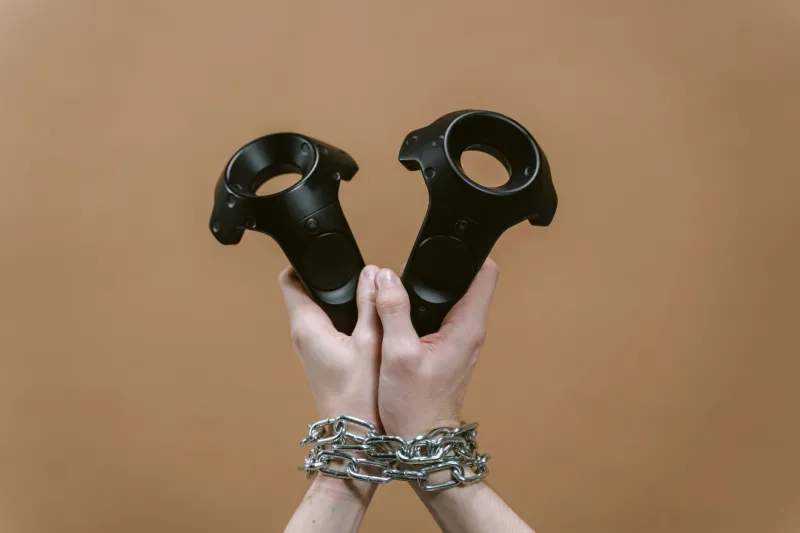
But you can't be free if you're chained to the idea that stopping is failing. Sometimes the chain you need to break is the one keeping you glued to a session that stopped serving you twenty minutes ago.
The players who go the furthest aren't the ones who never quit. They're the ones who know exactly when quitting is the right call — and come back the next day sharper, hungrier, and ready to actually win.
So the next time you feel that controller-throwing urge? Maybe listen to it. Set the thing down. Get some water. Let your brain do its thing in the background. The game will still be there. And you'll be better at it than if you'd stayed.