Pixel Dreams, Zero Dollars: How Indie Devs Are Crafting Worlds That Stick With You
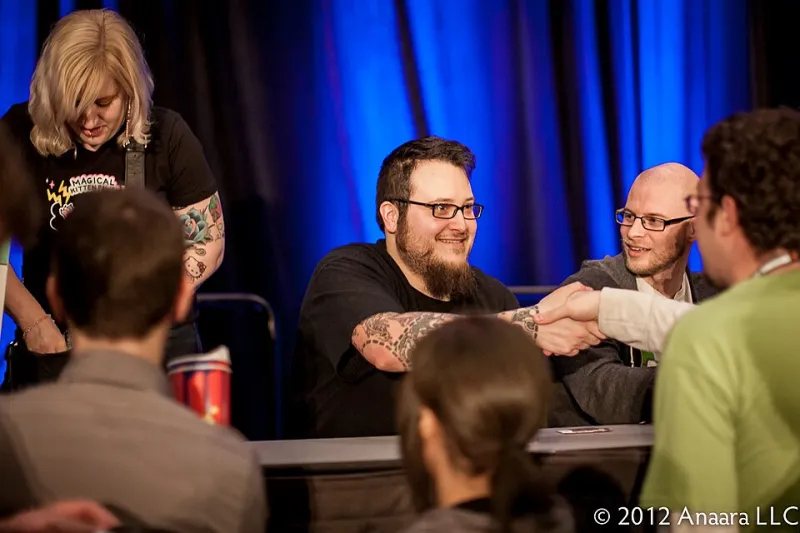
Photo: Fuad Kamal from USA, CC BY-SA 2.0, via Wikimedia Commons
The Myth of the Big Budget World
There's a persistent idea floating around gaming culture that says a great game world costs a great deal of money. You need motion capture stages, armies of concept artists, and server farms humming somewhere in California just to make players feel something. The indie scene has spent the better part of a decade quietly dismantling that assumption, one hand-drawn sprite and procedurally generated dungeon at a time.
The truth is messier and more interesting than either side of that argument. Building a world that lingers in a player's memory isn't about polygon counts. It's about intentionality — knowing what your game is about before you write a single line of code, and then making every asset, every sound cue, every line of dialogue serve that vision.
We talked to a handful of indie developers who've done exactly that, and what they shared paints a picture of resourcefulness that's honestly kind of inspiring.
Constraint as a Creative Engine
Ask any indie dev about their budget and you'll usually get a laugh before you get a number. But ask them whether that limitation hurt their game and the answer gets more complicated.
"When you can't afford to build everything, you have to decide what matters," says Marcus Reyes, the solo developer behind the critically praised 2023 action-RPG Hollow Veil. "I couldn't render a whole city, so I rendered one street — and I made that street tell the entire story of what happened to the civilization that built it. Players told me they felt the weight of that world more than games with ten times the scope."
That forced prioritization is something big studios rarely experience. When you have unlimited resources, it's tempting to fill every corner of your map with stuff. When you're working with a $12,000 budget and a two-person team, every asset has to earn its place. The result is often a kind of visual and narrative economy that feels deliberate rather than bloated.
This is something the action game genre in particular benefits from. Players are moving fast, making decisions in real time — they're reading environments on the fly. A world built with ruthless intention communicates more clearly to a player in motion than one cluttered with decorative noise.
The Art of the Visual Shorthand
One of the most powerful tools in the indie developer's kit isn't a software suite or a Kickstarter milestone — it's stylization. Choosing a visual style that plays to your team's strengths rather than competing with photorealism is one of the smartest moves a small studio can make.
Look at the staying power of pixel art. What started as a technical necessity has become a full aesthetic language, one that players associate with a certain kind of focused, purposeful design. Games like Shovel Knight, Axiom Verge, and more recently Crow Country have used it not as a budget workaround but as a genuine artistic choice that communicates something about tone and feel before a player touches the controller.
The same logic applies to stylized 3D, hand-painted textures, and even intentionally minimalist environments. "We couldn't texture everything the way a big studio would," explains Jade Okafor, art director at four-person team Rustlight Games. "So we leaned into flat colors and strong silhouettes. Now people tell us the game looks like a moving painting. That wasn't the plan — it was a solution that became the identity."
That kind of happy accident is more common in indie development than people realize. Limitation pushes developers toward solutions that end up defining their game's personality.
Narrative Without the Cutscene Budget
World-building isn't just visual. Some of the most immersive game worlds in recent memory have been built almost entirely through environmental storytelling — the kind that doesn't require voice actors, cinematic cameras, or a writing room full of consultants.
Scattered notes. Worn paths through grass. A weapon left beside a campfire with no explanation. These details do more narrative work per dollar than almost any other tool available to a developer, and they're essentially free if you're willing to think carefully about what story you're trying to tell.
Reyes describes his process as "writing backwards." He starts with an emotional endpoint — the feeling he wants players to have when they put down the controller — and then builds the world's details to support that feeling rather than explain it. "I never tell players what happened to the world in Hollow Veil. I show them. And because they have to piece it together themselves, they're more invested in it than if I'd handed them a cutscene."
This approach also sidesteps one of indie development's thorniest problems: the cost of quality voice acting and cinematic production. When your story lives in the world itself, you don't need a narrator.
Community as Co-Creator
Another card indie developers are playing increasingly well is community involvement. Early access launches, Discord servers where players actively discuss lore, and mod-friendly architectures all turn the player base into a kind of extended development team.
When players feel ownership over a world — when they're speculating about its history, creating their own content within it, or just arguing about its lore on Reddit — that world becomes bigger than anything the original team could have built alone. It's a force multiplier that no AAA marketing budget can replicate, because it's organic.
Rustlight Games used their Discord community to crowdsource feedback on environmental design during early access, adjusting level layouts based on how players actually moved through spaces. "They told us what felt alive and what felt hollow," Okafor says. "We made the game richer because of it, and it cost us nothing but attention."
What AAA Can Learn From the Scrappy Ones
Here's the uncomfortable truth for the big studios: some of the most memorable game worlds of the last five years came from teams working out of apartments and coffee shops, not campuses with rock-climbing walls. Disco Elysium. Hollow Knight. Hades. These aren't games that succeeded despite their constraints — they succeeded partly because of them.
Constraint demands clarity. It demands that you know what your game is and commit to it fully. That kind of commitment is exactly what creates worlds players can't stop thinking about.
For anyone at Unchained Blades who's been sleeping on the indie action space: now's the time to wake up. The most unchained creative work happening in gaming right now isn't coming from the biggest studios. It's coming from the ones with the most to prove and the least to lose.