Squad Goals and Screaming Matches: What Co-op Action Games Reveal About Your Friendships
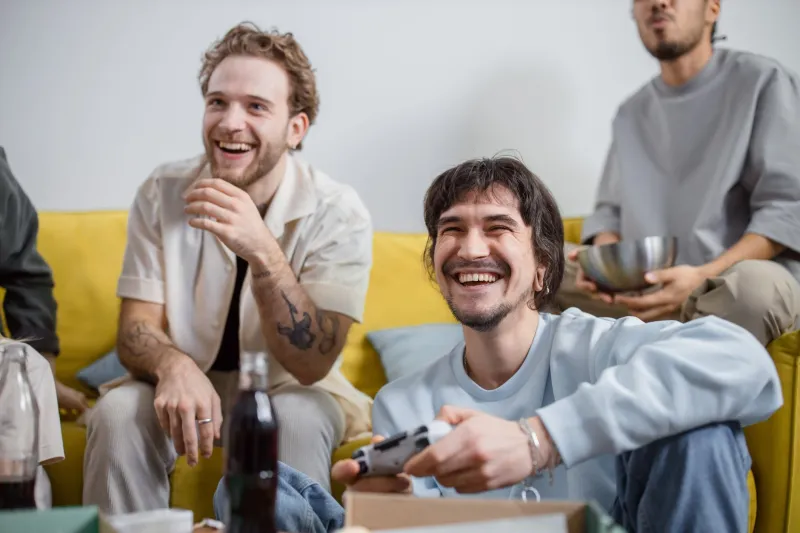
There's a moment every co-op player knows. You're deep into a dungeon, health bar flashing red, and your buddy — your best buddy, the one you've known since middle school — watches you get obliterated from across the map and does absolutely nothing. Maybe they were looting. Maybe they panicked. Maybe they just thought it was funny.
Either way, you're dead. And suddenly the living room feels a lot colder.
Co-op action games are uniquely positioned to do two completely opposite things at once: forge some of the most genuine human connections you'll ever experience through a screen, and stress-test those same connections until they crack. It's the friendship paradox nobody really talks about, and it's worth unpacking.
The Bond That Only Comes From Shared Suffering
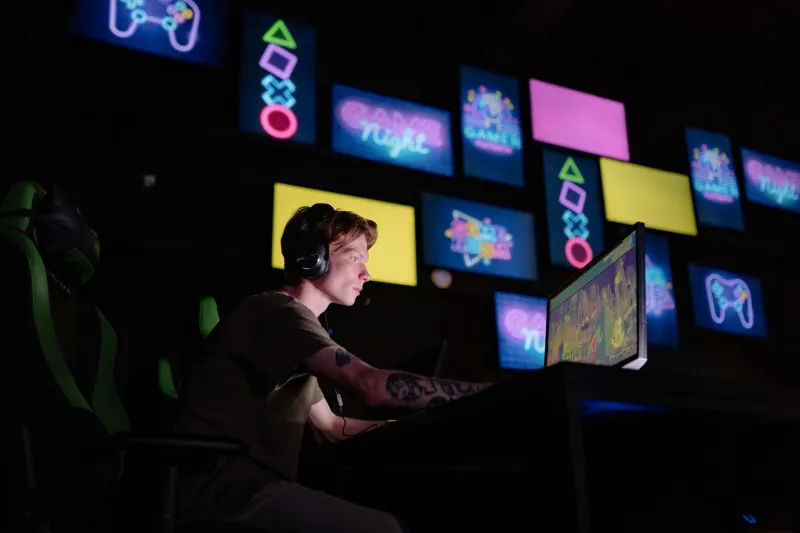
Ask anyone who's cleared a brutal raid with a tight crew and they'll tell you — there's nothing quite like it. Psychologists call it the "shared adversity effect," and it's the same reason military units develop fierce loyalty or why a group of strangers stranded together in a blizzard will feel like family by morning. When you're grinding through a punishing boss fight together, coordinating callouts, covering each other's flanks, and finally pulling off a clutch win on your twelfth attempt, your brain is literally bonding with the people in that moment.
Streamer and content creator Marcus "MarcOnDeck" Holloway, who runs a co-op-focused channel out of Atlanta, put it plainly: "Some of my closest friendships right now started in a co-op lobby. We didn't even meet IRL first. We just kept queueing together, kept talking through runs, and eventually it was like — yeah, this person gets me. The game gave us a language."
That shared language is real. Inside jokes born from specific in-game disasters. Callsigns that stick. A shorthand built from hours of play that bleeds into everyday conversation. Games like Deep Rock Galactic, It Takes Two, and Monster Hunter: World have become famous not just for their mechanics, but for the relationships players form inside them.
When Cooperation Curdles Into Blame
But here's the other side of the coin, and it's a sharp one.
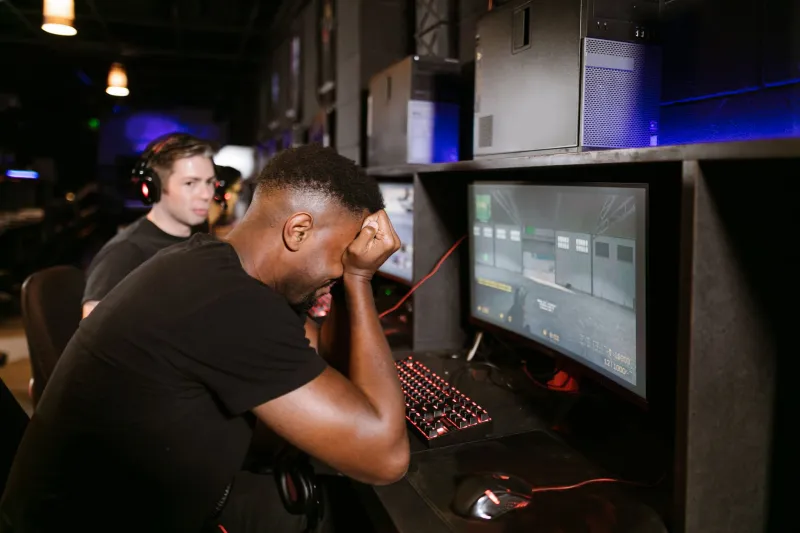
Co-op action games are also pressure cookers. When the stakes feel high — even artificially high, even when it's just a game — frustration is going to happen. And frustration needs somewhere to go. Too often, it goes directly at the person sitting next to you or on the other end of your headset.
Jamila Torres, a 28-year-old from Chicago who games casually with her partner a few nights a week, described a session of Hades co-op that nearly ended in a real argument. "We kept dying in the same room and he kept pointing out what I was doing wrong. Like, I know I messed up. I don't need the play-by-play. By the end of it we weren't even talking, just playing in silence."
This is the friction point. Co-op games ask players to be vulnerable — to expose their skill gaps, their decision-making, their reaction times — in front of people they care about. That vulnerability is exactly what creates closeness when things go well. But when things go sideways, that same openness becomes a target. It's easier to criticize someone you're comfortable with, and easier to feel hurt by criticism from someone you trust.
Game designer and independent developer Priya Mehta, who's been building a small co-op title with her studio since 2022, has thought about this a lot. "We actually playtested with couples and friend groups specifically because we knew those dynamics were different. What we found was that the games that handled failure together — where the system acknowledged both players struggled, not just one — produced way less finger-pointing."
How Smart Design Defuses the Blame Game
Mehta's observation points to something the best co-op action games are quietly getting right: social architecture.
Games that design failure as a shared experience rather than an individual one change the psychological calculus. When It Takes Two puts both players in a situation where neither can succeed without the other, blame becomes structurally harder to assign. When Deep Rock Galactic has players reviving each other in ways that feel genuinely heroic rather than obligatory, it reinforces a team identity instead of spotlighting individual errors.
Contrast that with co-op modes bolted onto games that were clearly built for solo play. These often create lopsided dynamics — one player carrying, one player floundering — that practically generate resentment. The design itself becomes a wedge.
Modern games are increasingly aware of this. Shared health pools, combined resource systems, and joint objective markers all push players toward collective ownership of outcomes. The message the game sends matters: you both did this hits differently than you let the team down.
The Communication Test You Didn't Sign Up For
Here's something nobody puts on the box: co-op action games are essentially live communication workshops.
Playing together under pressure forces you to practice real-time feedback, active listening, and conflict resolution — often without realizing it. The couples and friend groups who figure out how to give in-game criticism without it landing like a personal attack? They're developing a skill that absolutely transfers outside the game.
MarcOnDeck has watched this play out in his community repeatedly. "I've seen friend groups that were kind of surface-level become genuinely tight after a tough campaign. And I've seen friendships that seemed solid get weird after one bad session. The difference is almost always communication. Can you tell someone they messed up without making them feel like garbage? Can you hear that feedback without getting defensive? The game just... makes you do that work."
It's not always comfortable. But the discomfort is kind of the point.
Playing Together Without Tearing Each Other Apart
So what's the move? How do you get the bonding without the blowups?
For casual players, the answer is simpler than it sounds: set the tone before you load up. Decide together whether you're playing to win or playing to hang out. Those are different sessions with different rules, and mixing them up is where a lot of friction starts. A laid-back farming run and a serious progression push require completely different energy.
For developers, the responsibility runs deeper. The social systems baked into a co-op experience shape how players treat each other in ways that go beyond the screen. Design for collective success. Build in moments that make players feel heroic together. Give people reasons to celebrate each other rather than assign fault.
At the end of the day, co-op action games are one of the most honest mirrors we have for how we show up for the people in our lives. They strip away the small talk and put you in the fire together. What comes out of that fire — a stronger bond or a pile of ash — depends on the game, sure. But it depends a lot more on the players.
Choose your squad wisely. And maybe agree on a rule: no post-death commentary until you're back at the bonfire.